How to Buy Healthy Chicken

by Sophie Ellison

You walk into the grocery store and scan the refrigerator shelves for chicken. How do you decide which option is best? Is it cage free? Organic? Non-GMO? Free-range? “Natural”? Vegetarian-fed? Raised without antibiotics? Maybe you start to wonder if it even makes a difference, so you choose the cheapest option and call it a day. 

Turns out, there are dramatic differences between the plethora of chicken options.

Chickens are omnivorous foragers. In nature, you will find them 1) scratching at the ground, and 2) pecking at anything that moves. Most grocery store chickens, regardless of the marketing, are raised primarily, if not solely, indoors and on a corn and soy-based diet. 

When shopping for chicken, the most meaningful choice you can make is pasture raised. Pasture raised chicken means that the bird spent its adult life outside on pasture. It’s been shown that pasture raised chicken has a higher vitamin content (namely A, D, & E), better fatty acid profile, higher minerals (namely iron, zinc, & selenium), and lower contaminants (medications, growth hormones, and inflammation from stress and overcrowding). 

Another key element to look for is corn and soy free. Chickens do not easily utilize large amounts of corn and soy, which are heavily used in commercial chicken farming due to cheap costs and rapid production. Although corn and soy are high in calories, they are low in vitamins and minerals. As a result, these commercial factory farmed chickens are higher in omega 6s, lower in omega 3s, and overall less nutrient dense. These are not characteristics of healthy meat. 

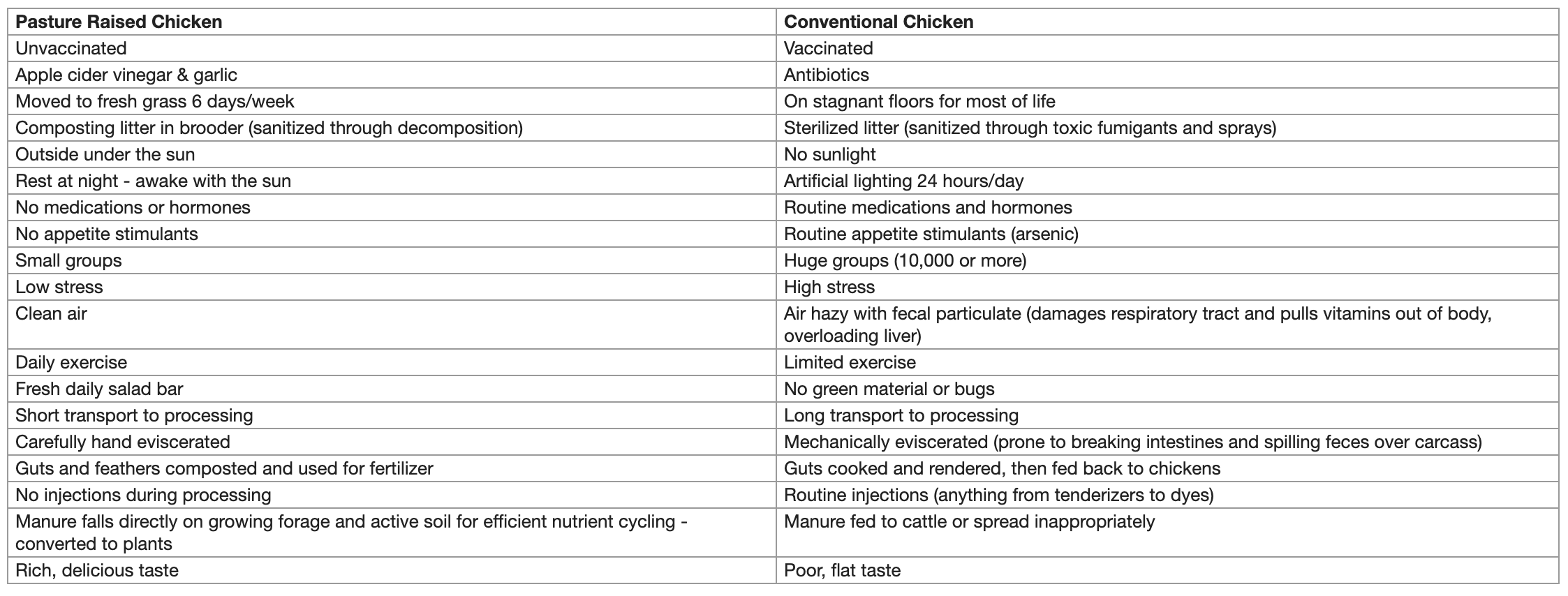
The following is a compare and contrast list of properly produced pastured chicken versus conventional chicken, inspired by Joel Salatin’s Pastured Poultry Profits:

When in doubt about your food choices, it’s always best to find a farmer that you can go to directly, ask questions, and see the process for yourself. This will help cut out the confusion so you can give your family the best, nutritious chicken your money can buy while supporting happy chickens.

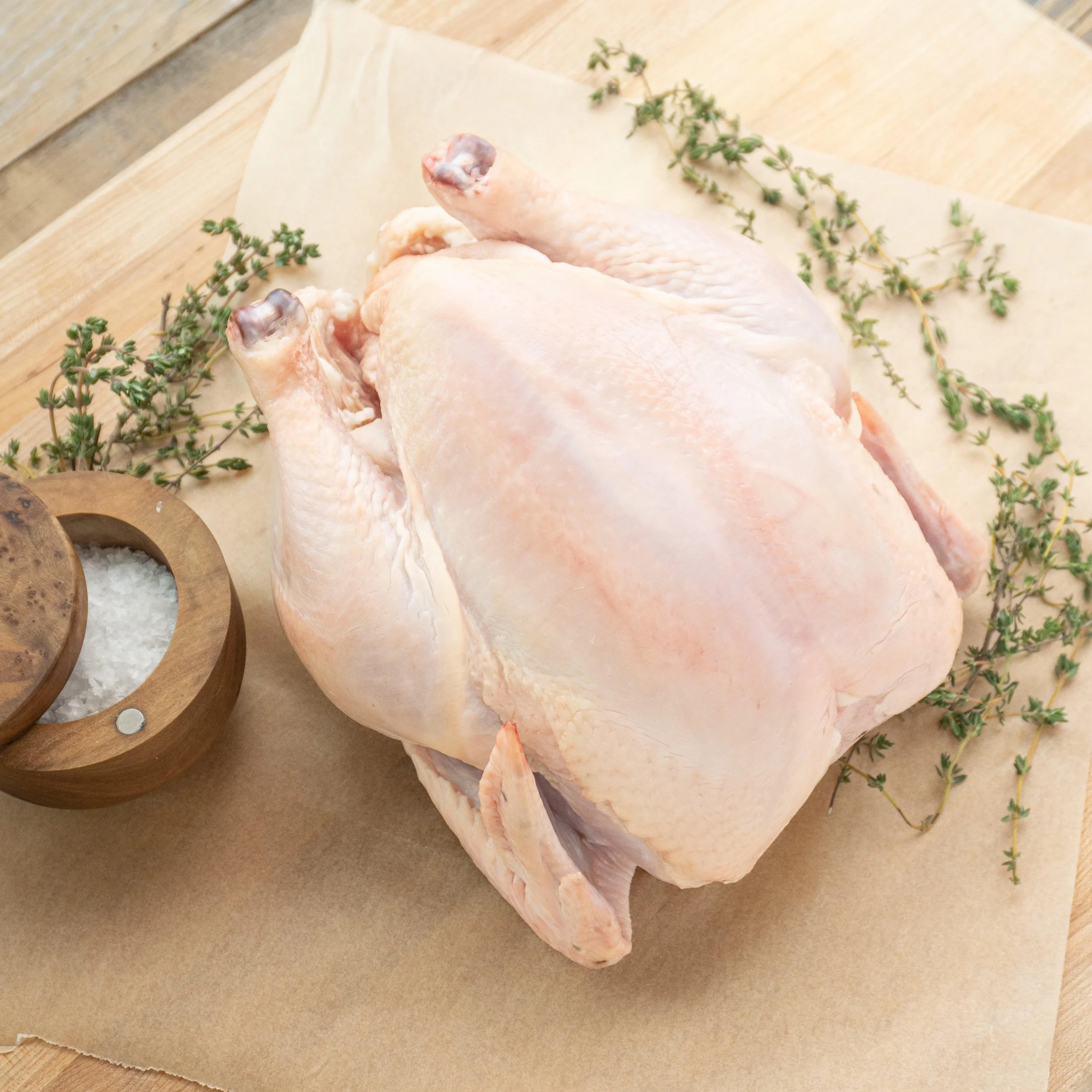
If you’re looking for a local source for corn free, soy free, pasture raised chicken, Grandad Farms in Emmett just harvested their last batch for 2025 and still have whole birds available. 

Price: $33 (most birds are 4 - 5 lbs)

Bulk Discount: Receive 10% off when you order 10 or more
Delivery: Available anywhere in the Treasure Valley for just $15, and free delivery over $200. 

https://www.grandadfarms.com/product/whole-pasture-chicken 

Provider Spotlight: Megan Doyle, LMT

Tell us about your practice.

In my practice I take care of women, predominantly during the childbearing continuum.

I specialize in fertility, pregnancy, and postpartum. I began working with pregnant clients in 2009 and expanded into women's health in 2017 with my training in Arvigo® Therapy, a type of Maya abdominal massage. I use this modality to address fertility challenges, endometriosis, PCOS, fibroids, painful periods, menopause, and more.

I love this work because it is a holistic approach that empowers women with tools to bring their reproductive and digestive health into their own hands. In fact, I teach clients a self-care abdominal massage during the first session.

In 2018 I did a postpartum care training that further transformed my practice. This work centers care for mothers to support their recovery and includes sitz baths, vaginal steaming, bone closing, moxibustion, belly binding, and massage.

I also teach a class for expecting families to prepare for the postpartum time. This class is taken prenatally between 20 and 30 weeks. I believe mothers are the center of our community and should be cared for and honored as such.

How is your practice and clinic different from other massage services? What are your guiding principles or philosophies?

Since I began having babies while still in massage school, I quickly developed a passion for this phase of life. I have continued to pursue teachings that are holistic and blend modern science with ancient wisdom.

As a mentor of mine teaches, we have strayed from our design in many ways in modern life, including diet, connection to nature, and a loss of traditional healing practices. This straying leads to dis-ease. Many of my clients are seeking a natural approach, especially relating to their reproductive health and birth choices.

Over the years I have watched as awareness about postpartum increased and now I feel that perimenopause and menopause is coming to the forefront. I hope to bring more awareness to the tools and care available to women in all of these seasons and to see a reduction in medicalized management of them.

If you could give one or two pieces of advice to the everyday, health-conscious person (our audience), what is something that they can do on their own to improve their health?

I am a big fan of going back to the basics when it comes to health challenges. Food is medicine. This is one reason I run a Weston A. Price chapter locally, connecting our community with sources for organic and regeneratively produced foods as well as aligned holistic practitioners.

Looking at sleep habits, circadian rhythm, exposure to toxins, and nervous system regulation should also come first before adding a multitude of supplements or other protocols. Finding ways to align your lifestyle with your innate design is never wasted energy.

Are you taking on new clients? If so, how can they find you?

I am accepting new clients and can be reached through my website and social media: intuitivewomb.com, @intuitivewomb

Fire Cider: A Traditional Herbal Tonic

by Sophie Ellison

As the weather turns colder, the sun becomes more scarce, and our time indoors increases, sickness often follows. Whenever our family starts to feel that first tickle in the throat, the first thing we reach for is fire cider. 

Fire cider is a warming, immune-support tonic. Herbalists love it for its pungent properties, which have been known to help boost the immune system, aid in digestion, and improve circulation. This spicy, tangy, and slightly sweet traditional folk remedy is easy to make at home. It’s made with a base of apple cider vinegar and a variety of roots, alliums, spices, herbs, and citrus. 

How to Make Fire Cider at Home

Ingredients

1 medium organic red onion, chopped or sliced 

1 medium organic white onion, chopped or sliced 

5 cloves of organic garlic, crushed or chopped

2 organic jalapeno peppers, chopped

1 organic lemon

1 organic orange

1 organic lime

1/2 cup fresh grated organic ginger root (or organic ginger root powder)

1/2 cup fresh grated organic horseradish root (or organic horseradish powder)

1 TBSP organic turmeric powder or sliced turmeric root

1/4 tsp organic cayenne powder

2 TBSP of dried rosemary leaves

Other optional add-ins: black peppercorns, cranberries, cinnamon, whatever you have

Organic apple cider vinegar with the mother 

1/4 cup of raw, local honey, or to taste


Prepare your roots, fruits, and herbs and place them in a 1/2 gallon-sized glass jar.

If you've never grated fresh horseradish, be prepared for a powerful sinus-opening experience!

Pour the apple cider vinegar into the jar until all of the ingredients are covered and the vinegar reaches the jar's top.

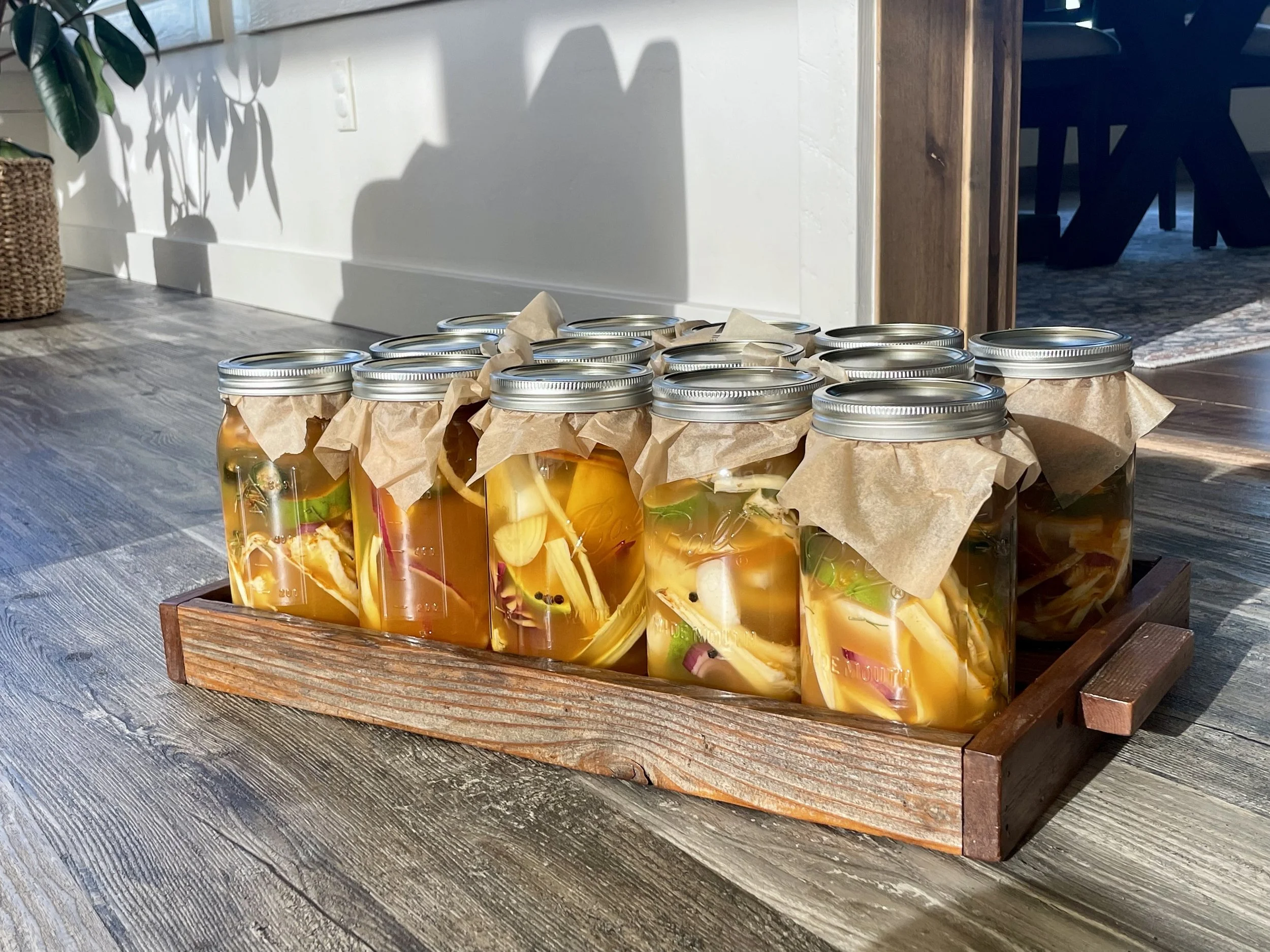
Use a piece of natural parchment paper under the lid to keep the vinegar from touching the metal, or a plastic lid if you have one. Shake well.

Store in a dark, cool place for one month and remember to shake daily.

After one month, use cheesecloth to strain out the pulp, pouring the vinegar into a clean jar. Be sure to squeeze as much of the liquid as you can from the pulp while straining.

Add honey and stir until incorporated.

Taste your cider and add more honey until you reach the desired sweetness.

How to Use Fire Cider

Take 1-2 TBSP daily as a preventative or at the first sign of illness. I recommend diluting it in a glass of water. Store in the fridge for up to a year.

Natural Health & Confident Parenting: What Dr. Mendelsohn Teaches Us About Raising a Healthy Child

by Sophie Ellison

As a parent, you've probably faced those moments of doubt when a fever spikes, a rash appears, or your child has their fifth cold of the season. In How to Raise a Healthy Child in Spite of Your Doctor, Dr. Robert Mendelsohn reminds us that you are your child's best advocate, and most common childhood illnesses do not require panic (or prescriptions).

This book has acted as a practical and informative guide for the way we approach our family’s health. It resonates with our belief in food as medicine and the power of natural living as Dr. Mendelsohn instills confidence and promotes true health. 

Who is Dr. Mendelsohn? 

Dr. Robert S. Mendelsohn (1926–1988) was an American pediatrician, educator, and medical icon who practiced for over thirty years. As a professor at the University of Illinois Medical School and a practicing pediatric MD, he was deeply embedded in the medical establishment— until he began to notice what he called “institutionalized foolishness” from within.  

Over the years, Dr. Mendelsohn became increasingly critical of what he saw as the overuse of medical interventions, especially in pediatrics. He believed that many common treatments, vaccines, prescription drugs, and other doctor office procedures caused more harm than good, and that parents were too often pressured into unnecessary action out of fear instead of facts. 

His core message was simple yet controversial: most children are healthier with less medical intervention, not more. With fiery darts coming from every direction, he affirmed that parents should be empowered to trust their instincts, ask questions, and not feel intimidated by medical authority. His legacy lives on through his bestselling book How to Raise a Healthy Child in Spite of Your Doctor, published in 1987. His written work continues to inspire curious families to take a more informed approach to healthcare. He believed parents often know what’s best for their children and boldly encouraged them to believe the same. 

"One of the biggest tragedies of organized medicine is that it has taught people to distrust their own instincts." - Dr. Mendelsohn

Some key takeaways I gleaned from his work: 

  • Most childhood illnesses are self-limiting. The inevitable colds, flus, fevers, headaches, earaches, etc. usually don't require antibiotics or even a doctor's visit. 

  • Fevers are not the enemy. Dr. Mendelsohn reframes fevers as the body's defense against disease, not something to fear. 

  • Parents know best. He encourages trusting your intuition and learning basic home health skills, many of which he so informatively shares. 

  • Flee the overuse of medication and testing. In the first chapter titled "Most Things Get Better By Morning" his advice is to “avoid your doctor whenever you can”. 

  • Use nutrition and lifestyle as prevention. The foundation of your family’s health is good food, good sleep, fresh air, and emotional connection. 

Whether you're a new parent or welcoming your seventh baby, How to Raise a Healthy Child in Spite of Your Doctor is a timeless guide to raising resilient, vibrant, robust children. It’s amazing to me how Dr. Mendelsohn was so ahead of his time. I can only imagine what he would say today given how much more extreme things have become. Today, many of us are laden with Google overload, conflicting advice, and our own over-medicalized childhood. Hence why this book is such a breath of fresh air. It’s a balanced, concise resource for cutting out the doubt. It’s not about being anti-doctor, it’s about informed consent and personal vitality for your family. 

Grandad Farms: Natural, Local Chicken

At Grandad Farms, we raise meat chickens on pasture, without shortcuts, in stewardship of God’s creation.

In the morning at 6:30am, I move our broilers to fresh pasture in chicken tractors - mobile chicken coops that are designed to move poultry to fresh ground and leave their manure behind. I slide a specialized dolly under the back of the tractor to add a temporary set of wheels. As I pull the tractor forward with a rope, the chickens run forward onto the fresh, green pasture of grasses and legumes. In addition to enjoying our unsprayed pasture, the chickens receive apple cider vinegar, garlic, and a GMO-free, corn-free, soy-free feed.

By rotating them on pasture regularly — six times per week — we keep the chickens clean, the forage fresh, and the soil thriving.

On our family farm, we raise Freedom Ranger chickens instead of Cornish Cross, the standard in American poultry factory farming. Cornish Cross boast fast growth rates, but they are often unhealthy, with weak hearts, poor feathering, and skeletal issues. Freedom Rangers grow more slowly, but they’re strong, beautiful birds that thrive outdoors. Even our USDA-inspected poultry processor notes how robust and healthy our birds are at harvest.


One of the most rewarding surprises has been watching our pasture improve. You can easily see the difference — rich, dark green strips mark where the chickens have visited about two weeks prior.

We’re thrilled to be raising food that families can feel good about eating. Our whole pasture-raised chickens are now available at grandadfarms.com, and we welcome you to reach out if you’d like to learn more or come visit the farm.

– Mark & Sophie Ellison
Grandad Farms | Emmett, Idaho

The Real Organic Project

Photo courtesy of the Real Organic Project

The Real Organic Project (ROP) is a farmer-led movement to protect the future of organic food.

The USDA Organic certification has strayed from the roots of what organic means — to produce food in a way that creates vitality for people and the planet.

For example, did you know that the USDA certifies organic egg farms for chickens that have never been outside?

Or that the USDA certifies confinement dairy operations?

Most people don’t realize this, but you deserve to know what food you are buying and where your dollars are going.

ROP certifies farms that meet their truly organic, high quality standards. You can find farms in your area at their website. Saint John’s is proud to be certified by the Real Organic Project!

The USDA has failed to enforce important aspects of the organic law. As a result, it has become ever harder for small to mid-sized farms to survive while staying true to organic principles. In the face of the corporate theft of the USDA seal, the organic community united in creating the Real Organic Project. We are championing an “add-on” label for greater marketplace transparency.
— Real Organic Project

The see the stark contrast of the Real Organic Project’s definition of “organic” and the USDA’s definition of organic, check out this gallery of organic farms.

Postpartum Freezer Meals: Essential Nourishment for Mothers

by Courtney Meyerhofer

Any day now, I’ll be giving birth to my third baby.

Amidst all of the last minute house projects, organizing baby clothes, and arranging support for my older kids, there’s one thing I do that, without fail, has a monumental impact on my recovery and experience as a mother…and it’s freezer meals!

Our culture gets it all backwards.

During pregnancy in the mainstream culture, there is a an overwhelming focus on the baby gadgets and gear. This is often the focus to the detriment of the mother’s well being and health.

During my first pregnancy, I spent so much time researching the perfect stroller, car seat, baby carrier, sound machine, etc.

Did I have the highest rated, leak-proof diapers and baby toys that would “stimulate brain development”?

Did I have the “correct” pacifier and bottle-type?

The options are truly endless.

Little did I know that babies actually need very little…and what they need most is a well-nourished, well-cared-for mother.

For the first 3 months, the mother and baby are not separate. They are an intimately-linked dyad, the mother-baby. The baby cannot thrive if the mother is not thriving. For the mother to thrive, she must be nourished in her body, mind, and spirit.

To put this in perspective, during the last trimester, the average mother gives about 10% of her mineral stores to her baby. It’s a massive download of essential minerals that the mother must recover during the postpartum time. Without adequate nutrition, it will be hard for her to recover to her previous level of vitality while also meeting the needs of her newborn child.

The essential nourishment a postpartum mother needs is simple, yet can be challenging to execute. A mother needs rest, emotional and practical support around the house, nourishing meals, and to hold and nurse her baby.

Here are the foods to prioritize:

  • bone broth (organic, grass-fed)

  • organic, grass-fed raw milk

  • grass fed dairy products

  • organic, grass-fed beef liver and heart

  • pastured egg yolks

  • foods that are easy to digest

The meals I made this time:

My strategy was to make double or triple what I normally cook and then freeze the rest. So if I make breakfast burritos one morning, I’d double it and freeze the leftovers. This worked better for me than doing extra cooking sessions, and it saved me the chore of extra dishes.

For soup storage, I’m trying out these pint-sized paper ice cream containers instead of plastic gallon bags. I’ve done the plastic bags in the past, and they were generally a mess and leaked horribly. Plus, I prefer to use paper and glass instead of plastic when possible.

Supporting mothers yields dividends beyond our comprehension…dividends that have been shown to affect three to four generations after her, for better or worse.

Never forget that the hand that rocks the cradle is the hand that rules the world.

Provider Spotlight: Kellen Pickard, L.Ac.

Tell us about your practice. What services do you provide? How long have you been in practice? Why did you choose this path?

  I am a licensed acupuncturist providing acupuncture, acupuncture with electrical stimulation, fire cupping, moxa, nutritional guidance, herbal consult, and lifestyle advice.

I have been in practice for 14 years.  I chose this path based on the philosophy of Eastern Medicine.

I’ve always been drawn to health, wellness, natural cures, and prevention but didn’t find a comfortable fit in the Western medical model. When I discovered acupuncture school by chance, I was immediately intrigued and realized it was exactly what I had been looking for. 

How is your practice and clinic different from standard offerings? What are your guiding principles or philosophies?

My practice stands out by offering one-on-one sessions lasting an hour to an hour and a half.

I take a deep dive into past and current health concerns and assess body systems. 

My guiding principles are rooted in the philosophy of Eastern Medicine—treating the whole person, not just symptoms.

I focus on finding the root cause of imbalances, promoting natural healing, and supporting the body's ability to restore itself.

Each treatment is personalized, integrating acupuncture, lifestyle guidance, and holistic wellness to achieve lasting health and balance.  

If you could give one or two pieces of advice to the everyday, health-conscious person (our audience), what is something that they can do on their own to improve their health?

Eat Real, Whole Foods – Choose foods that are natural, unprocessed, and free of toxins. If you consume something daily—whether it’s food, drink, or skincare—ensure it’s clean and nourishing for your body.

Prioritize Sleep & Manage Stress – Quality sleep is essential for healing and overall health. Create a restful nighttime routine and find healthy ways to manage stress, such as meditation, deep breathing, or movement, to support balance and well-being.

Are you taking on new clients / patients?

  Yes! I am currently accepting new patients. I work out of my home Monday through Friday and would love the opportunity to support anyone from our community on their health journey.  

Learn more about Kellen and her services at her website!

All About WHEY

by Courtney Meyerhofer

Have you ever eaten curds and whey?

Whey is a component of milk that separates during the cheese-making process. Once milk is curdled and strained, whey is the fluid leftover from that process.

Liquid whey has a mild tangy flavor and a clear light yellow color.

Whey is commonly converted into whey protein powder and sold as a supplement.

You can use the power of whey to boost the protein and add flavor in your everyday dishes. Here’s how.

How to Use Whey

  • Whey can be substituted for water in many bread recipes to give it extra protein and a richer flavor.

  • Whey is an excellent meat tenderizer. Soak a roast or pork chops in whey for a few hours before cooking.

  • You can use whey as a braising liquid for soups, stews, and roasts.

  • Use whey as the cooking liquid in rice or pasta to add extra protein to your dish!

  • Whey is an essential ingredient in making ricotta cheese.

  • You can use whey as a buttermilk substitute!

how to make whey

The easiest and fastest way to make whey is to make cottage cheese.

Follow instructions here to make your own cottage cheese and whey from fresh milk.

We have whey for sale! Contact us at saintjohnsorganicfarm@gmail.com or text us at (208) 254-1108.

2024: A Year in Review

Happy New Year!

2024 was an eventful, memorable year for us.

Here’s what made the highlight reel:

Nala, one of our best milk cows.

We continued all year with the Raw Milk Co-op. We have a great group of folks. We are so thankful for all of you!

We welcomed a new grandbaby this year. Baby Samantha is Heather and Aaron’s daughter. She’s beautiful and they’re doing so well.

Jonathan was home for the Spring. We loved his company and were grateful for his help.

Peter hired three 15 year-olds in the summer. It was fun and we got a lot of work done!

Peter gave a talk on pastures at the 3 Sisters Greenhouse.

We had monthly farm tours in the summer that were attended by the most interesting groups.

Smoky sunset in August

The late summer / early fall was particularly smoky. The smoke affected people, animals, and the grass growth.

Claire finished working as farm manager in August and married at the end of September. She lives in Fruitland now.

We are so grateful to Claire’s lifetime of working with us!

Peter is now acting as the interim farm manager.

We sold out of beef in November! Stay tuned because we’ll have more.

JJ is home for Christmas. All is well.

Thank you, dear reader, for supporting our family farm and for a great year.

Blessings to you in 2025!